
Neosho Federal Release Routes
The Federal Bureau of Prisons manages people serving federal sentences. It is a nationwide system, and the official research found no BOP institution in Neosho County. A federal case connected with Neosho County may result in confinement far from Kansas. The place of conviction, the prison location, and the place where a person later lives are separate facts. The BOP Inmate Locator is therefore the first public route for a sentenced federal prisoner, even when the underlying events have a Neosho County connection.
A BOP result marked Released means the person is no longer in BOP custody. When a past release date appears and no facility is listed, BOP defines that date as the date the person left its custody. The result does not establish freedom from federal supervised release, state custody, an immigration hold, or another case. Supervised release is a court-ordered period in the community after prison. It is not BOP imprisonment, but it remains a legal obligation. Read the agency name with every status.
Confirm a BOP Release
Search by a federal identifier when one is known. The locator accepts a BOP register number and certain other federal agency numbers. An identifier is safer than a name-only match. A name search can use first, middle, and last name plus age, race, or sex filters. Compare the returned register number, age, and other public details before treating the result as the correct person.
- Open the BOP locator and choose the identifier or name search.
- Enter the narrowest reliable details and open the matching record.
- Read the status, facility field, and date together.
- Check BOP’s record definitions before interpreting an unusual label.
- Use the federal docket to confirm the sentence and later supervision.
A future date is projected, not completed. In Transit describes a custody movement. It is not release. Unknown means BOP does not provide a determined date in that result. Sentence recalculation, including First Step Act credit work, can change a projected date. The broader Neosho County released-inmate search guide shows when to leave this federal lane and use the county, KDOC, ICE, or USMS source instead.
BOP Release Labels Explained
The locator covers BOP records from 1982 forward. That scope matters. An older federal case or a person held only before trial may not produce the expected result. The system is a sentenced-custody locator, not a complete national list of everyone ever held on a federal matter. A blank search must not be converted into a claim of release.
The official BOP locator definitions explain the fields behind a result. The captured page below is matched to this subject and shows the agency’s own context for interpreting locator records.
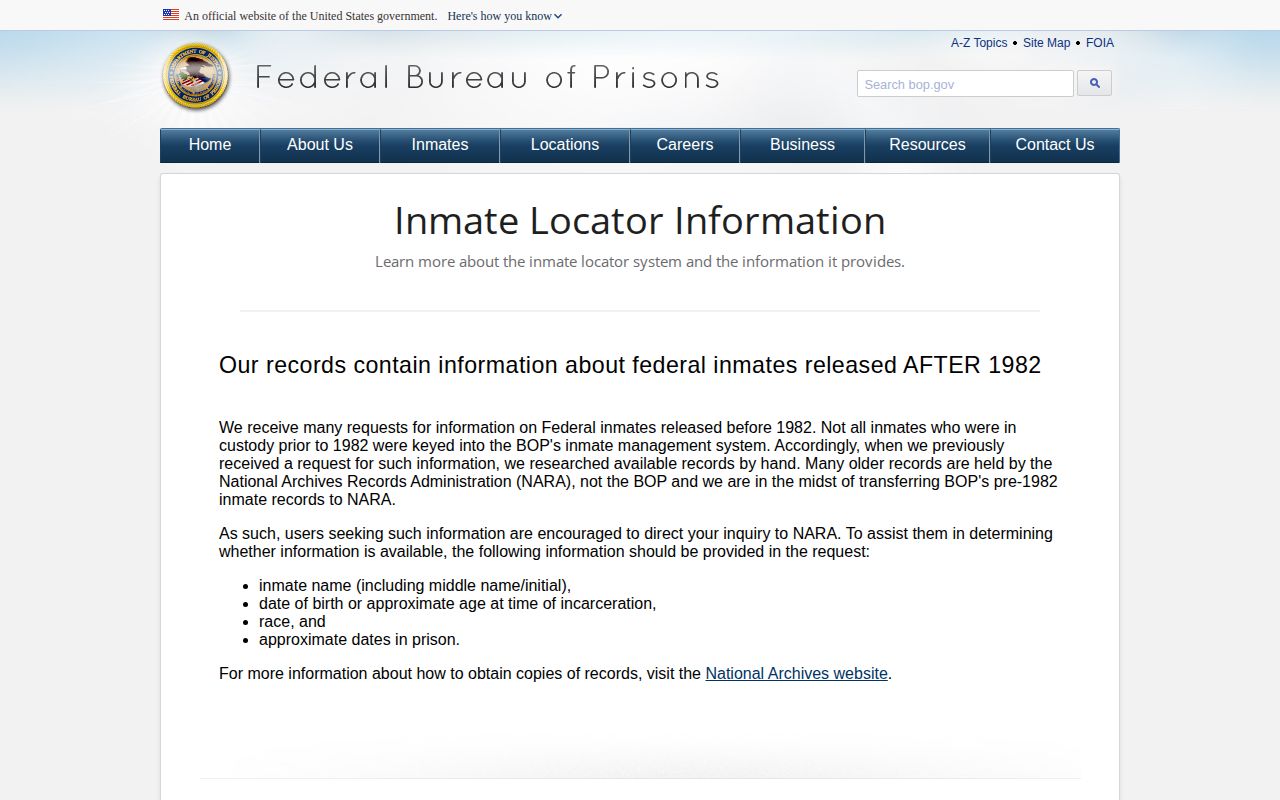
Keep the wording precise: “no longer in BOP custody” is supported by a released result. “Free from all custody” is not. If a state, county, or immigration agency received the person, that later custodian needs its own verification.
Neosho Federal Court Records
The U.S. District Court for the District of Kansas records page supplies the judicial route. PACER provides electronic federal dockets, and courthouse terminals provide another access channel. Search the docket for the judgment, sentence, release or detention orders, and terms of supervised release. The court record explains legal authority. BOP describes physical custody under the sentence.
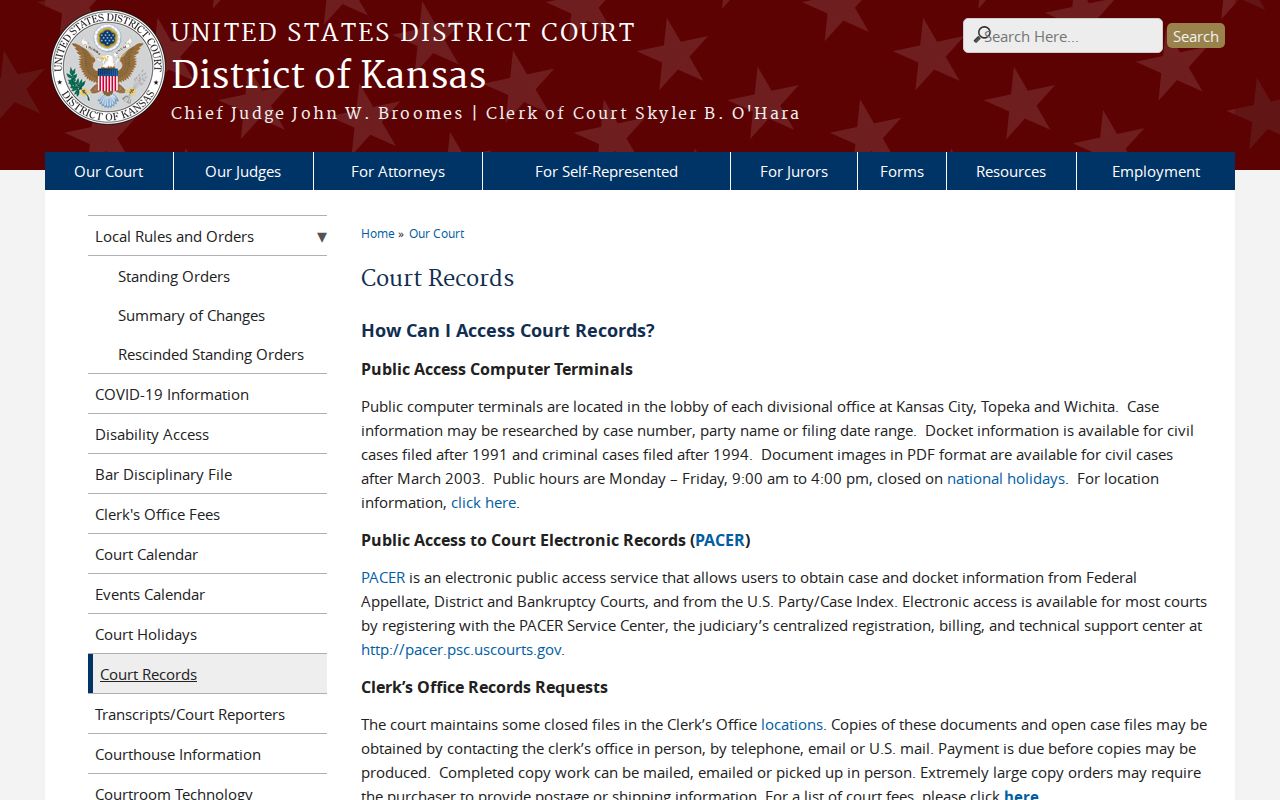
Do not treat a judgment’s projected end or a court order alone as proof of the exact physical exit time. Administrative processing and another hold may affect the actual handoff. Conversely, a BOP release result does not state every condition imposed by the court. Use both sources when the distinction matters for a personal, notification, or legal purpose.
BOP Records and Contacts
This page represents a federal system, so it has no Neosho County street address or local BOP desk. Start with the locator for a public status. For an agency record that is not shown there, use BOP’s official records or Freedom of Information Act route and identify the person by full name, register number, birth information, and the particular record or date range sought. A narrow request is easier to route than a request for an entire history.
Federal Bureau of Prisons system
Public status: BOP Inmate Locator
Record meanings: About BOP records
Court context: District of Kansas court records
Include the BOP release-status field and displayed date in a request for clarification. Ask whether the date is actual or projected and whether the record reflects a transfer. Do not send a BOP sentenced-custody question to the Neosho County Sheriff merely because local events preceded the federal case.
ICE Custody After BOP Release
Research Section 19’s distinctive federal angle is the short ICE lookback. The ICE Online Detainee Locator System covers current detention and people released from ICE custody during the prior 60 days. A BOP release can be followed by an ICE transfer. In that sequence, the BOP result correctly shows the end of federal prison custody while the person remains detained by a different agency.
No official evidence established a Neosho County ICE contract facility. The ICE lane is included because custody can move between systems, not because an ICE center exists locally. Check ICE detainee release separately. After the locator’s recent-release window, use ICE records or immigration-case channels rather than assuming that a missing result proves a specific outcome.
Separate Neosho Custody Systems
BOP, USMS, ICE, KDOC, and Neosho County each record a different event. USMS generally controls federal prisoners before a BOP designation. The federal docket is often the best public source for a pretrial detention or release order because USMS has no matching historical locator. A person delivered from USMS to BOP remains in custody. A person acquitted or released by court order may never develop a sentenced BOP locator record.
KASPER belongs to the Kansas Department of Corrections. It does not track a federal sentence merely because the conduct or arrest occurred in Kansas. The Neosho County Jail record ends a county booking and can state whether the outcome was release or transfer. For a suspected federal pretrial matter, use the USMS custody route. If the last known custodian was the county jail, request its discharge date, time, authority, and destination before choosing the next system.
Match Neosho Federal Records
Do not match a federal release on name alone. Collect the BOP register number when possible, along with the full legal name, aliases, date of birth, and federal case number. Compare the court district, sentencing date, and public locator details. A photograph may help, but it is only supporting evidence. Names change, images age, and two people can share the same basic biographical facts. Record the exact source and the date checked.
Historical confidence also depends on source scope. BOP’s coverage begins in 1982, while court access can be limited by sealing or other lawful restrictions. A negative search is weaker than a positive, identifier-matched record. If a result cannot be reconciled with the docket, ask BOP about the specific register number and date rather than guessing why the entries differ.
Request a BOP Release Record
A useful request names one person and one custody period. Ask for the releasable record that shows the actual date and type of departure from BOP custody, and state whether the displayed locator date prompted the request. Include the register number, full name, birth date, case number, sentencing court, and approximate facility or date range. Request electronic delivery when available and ask for a fee estimate.
When a response is redacted, distinguish information that was withheld from information the agency does not maintain. If BOP refers the request elsewhere, follow the identified custodian. A federal court judgment can support the timeline, but it should not be used to invent an agency exit time. Keep the locator capture, docket entry, and records response together so each claim remains tied to the office that created it.