
Neosho ICE Release Routes
Immigration and Customs Enforcement operates a national civil detention network. Civil detention is custody connected with immigration proceedings, not a sentence in a Kansas criminal case. No official source reviewed for this project established a dedicated ICE detention center or an ICE contract facility in Neosho County. The page is a system route because a person can pass from local custody to federal immigration custody, not because ICE operates a local building.
A person can leave Neosho County Jail under an immigration detainer and remain detained by ICE. A detainer is a request or notice tied to another agency’s custody interest. The county discharge record should identify the local exit and destination when maintained. ICE must then confirm its own custody event. Those may be days or months apart, so “released from Neosho County custody” and “released from ICE custody” must never be treated as the same date.
Check an ICE Detainee Release
The ICE Online Detainee Locator System, often called ODLS, is the main public search. It covers people currently detained and those released from ICE custody during the prior 60 days. It does not accept searches for people under 18. Search with the person’s A-Number and country of birth when those details are known. An A-Number is the immigration file number. The alternative name search requires exact identity details and country of birth.
- Confirm that ICE, rather than the county, BOP, or USMS, is the likely custodian.
- Open ODLS and choose the A-Number or biographical search.
- Enter the exact available details and compare the returned identity.
- Read the status as an ICE-only custody statement.
- Contact the listed facility or ICE channel when the result needs confirmation.
A missing result can mean incorrect identity data, a record outside the public scope, or a release older than the short lookback. It does not prove community release. Start at the Neosho County custody decision guide if the controlling agency is uncertain.
ICE’s 60-Day Release Window
Research Section 19 highlights a feature unique among these local and federal routes: ODLS includes people released from ICE custody during the prior 60 days. That makes the locator useful soon after an immigration-custody event. It also creates a firm limit on historical inference. Once the period passes, disappearance from the locator says nothing reliable about the release date, release terms, or later legal status.
The official ICE detention resources page provides the agency context for detention and locator tools. The page-matched capture below documents that source.
Preserve the date when a result is checked. For an older event, use ICE records, immigration case channels, or authorized counsel information. Never fill the historical gap with an unverified third-party listing.
Neosho Jail to ICE Transfer
When the person was last known at Neosho County Jail, first request the county’s discharge date, discharge time, authority or type, holds, and transfer destination. Kansas’s permanent Jail/Commitment Record can preserve the core discharge fields even though the sheriff’s inspected public pages exposed no release archive. A transfer entry proves the county booking ended. It does not prove ICE later released the person.
Temporary-hold material can have a shorter retention period than the permanent commitment record. That is a reason to make a focused request promptly. Identify the exact booking, full name, aliases, date of birth if known, arresting agency, and case number. Ask for electronic delivery and an advance fee estimate. If the county confirms transfer to ICE, then search ODLS and record the separate federal result.
No local ICE contract was verified. The statewide retention schedule’s mention of immigration-related temporary holds is a generic record category, not evidence that Neosho County held any named person for ICE or maintained a standing contract.
ICE Records and Contacts
This is a national network with no verified Neosho County facility address. Use the locator for public current or recent status, then follow ICE’s detention resources for facility and case-routing information. For an event outside ODLS, request the specific agency record through the appropriate ICE records channel. Provide the A-Number when available, full identity details, the approximate detention period, and the exact fact sought, such as release date or transfer destination.
ICE detention network
Public status: Online Detainee Locator System
Detention guidance: ICE detention resources
Local handoff record: Neosho County Jail route
Ask whether a response describes release from ICE detention, transfer within the network, or transfer to another authority. Do not ask the Neosho County Sheriff to interpret a later federal immigration event. Likewise, an ICE result cannot supply the exact county-jail exit time unless the county record confirms it.
Neosho Federal Record Context
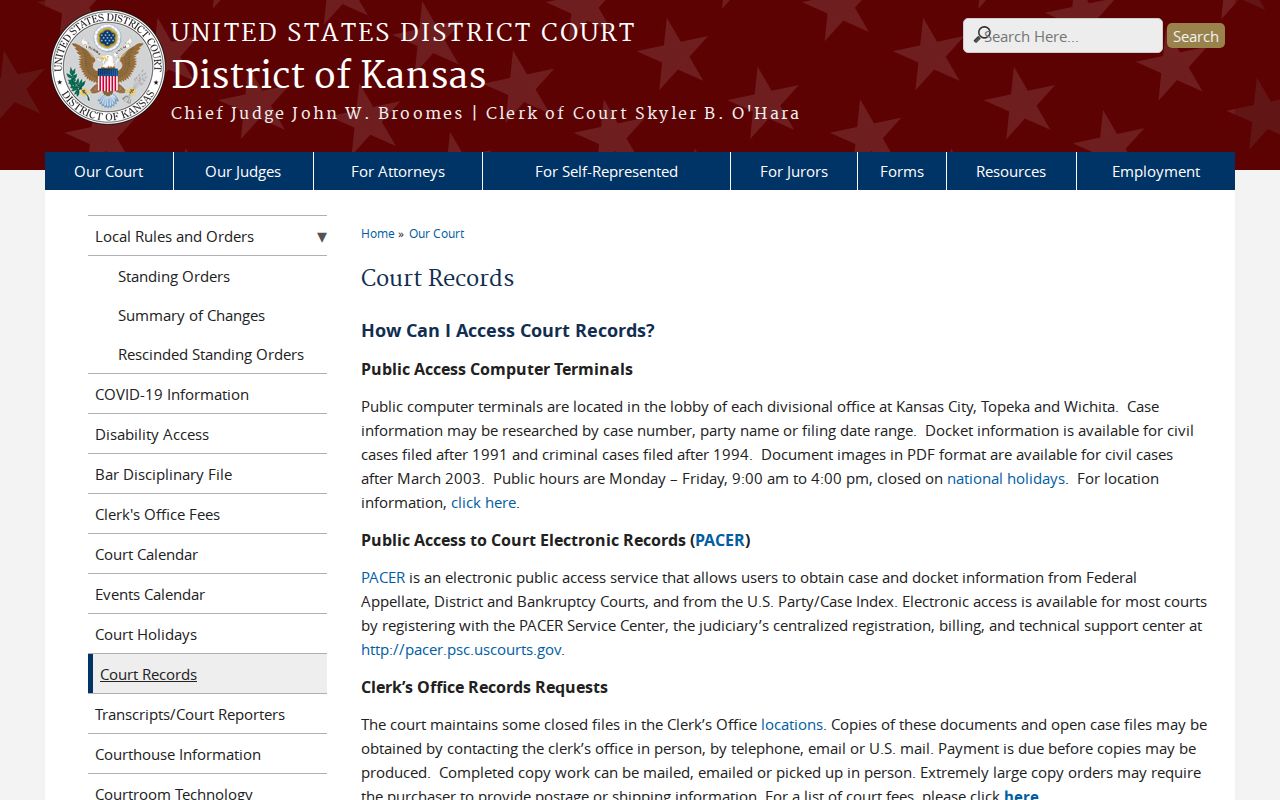
A criminal docket and an immigration detention record serve different legal processes. If a federal criminal case also exists, the District of Kansas court records page explains PACER and courthouse-terminal access. That docket may show a criminal detention order, sentence, or release order. It does not substitute for ODLS when ICE separately controls the person.
Immigration case access and counsel-authorized information may be needed after the locator window closes. Keep each finding labeled by source and date. A court order can show legal authority, while the custodian’s record shows whether and when a physical handoff occurred.
Separate Federal Custody Results
BOP covers sentenced federal prisoners. A BOP result marked Released ends BOP custody, but an ICE transfer may follow. USMS generally controls federal pretrial prisoners and has no equivalent historical public locator. KDOC’s KASPER system covers Kansas sentences, not civil immigration detention. VINE concerns participating county custody and is not an ICE archive.
These boundaries prevent a common error. A person can vanish from one system because another agency received the person. Use the BOP release route for a federal sentence and the USMS pretrial route for a federal detention order. For a county booking, the Neosho discharge destination should guide the next search. Only the agency controlling the later custody can confirm its end.
Match an ICE Release Record
Identity matching is especially important when a name has several spellings. Prefer the A-Number and country of birth. Also collect the full name as recorded by ICE, aliases, date of birth, and the date and place of the last known custody event. Compare these facts with the Neosho booking or federal case record. Never treat a similar name as a confirmed match.
Take note of when ODLS was checked because its public scope changes with time. Save only the details needed to document the status. If two sources differ, determine whether they describe separate events. A county transfer date can precede an ICE release date without conflict. The first ends local custody; the second ends ICE detention.
Request Older ICE Release Details
After the public window closes, write a focused request for the releasable custody record. Identify the person by A-Number and full biographical details, give an approximate detention range, and ask for the actual release date, release type, and transfer destination if maintained and releasable. Explain that electronic records are preferred and request an advance fee estimate.
An immigration proceeding may have its own record route, and authorized counsel may have access that a public locator does not provide. Keep the ODLS check, county discharge response, and federal response labeled separately. If the agency withholds material, cite the response rather than filling the gap. If it identifies a different custodian, continue with that office. This creates a reliable chain without turning a missing online result into a claim about community release.